

Playfield Anatomy: Every Element Explained
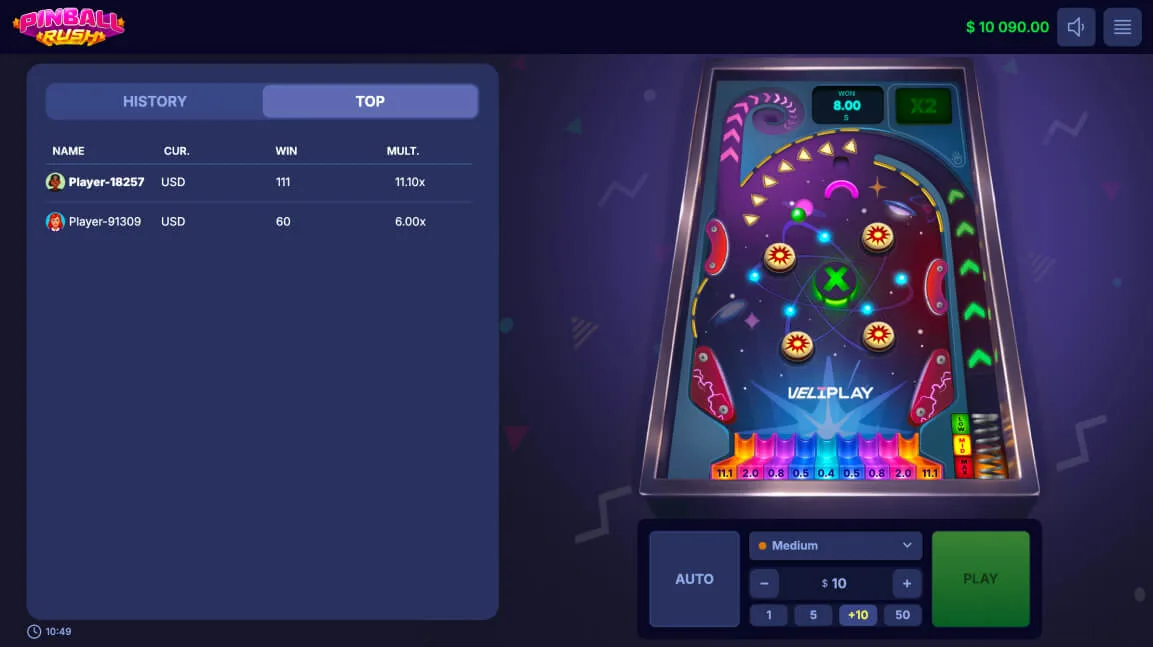
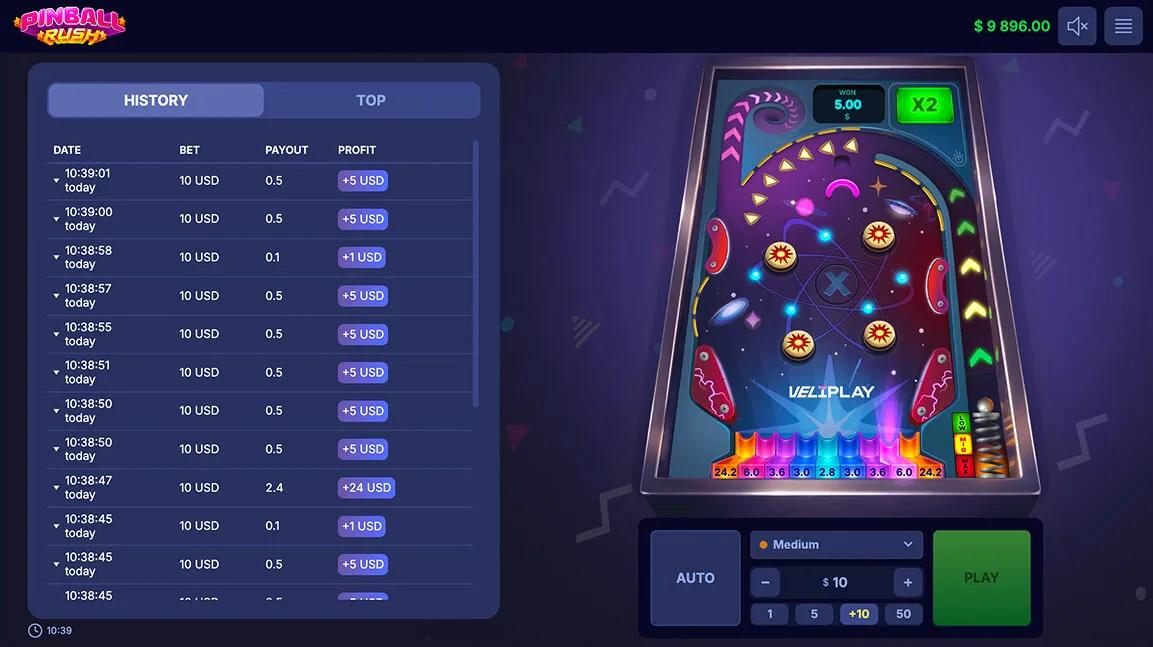
Pinball Rush is not a passive ball-drop game. The playfield is a structured obstacle course with elements that each behave differently. Understanding what each element does is the single most important step toward reading ball paths correctly.
Kickers
Kickers are angular deflectors positioned throughout the mid-playfield zone. When the ball contacts a kicker it is redirected at an angle rather than continuing on its current trajectory. Kickers are what give each round its visual unpredictability — two rounds that start identically can diverge completely after the first kicker contact. On Hard difficulty, kicker placement creates more extreme angle changes, contributing to higher variance.
Slingshots
Slingshots add kinetic energy to the ball on contact, increasing its speed and sending it deeper into the playfield faster. They are typically positioned in the mid-to-lower section of the board and contribute meaningfully to the multiplier count. A ball that hits several slingshots in sequence accumulates bounce count quickly — this is generally positive for multiplier growth but reduces total round time.
Light Activation Bumpers
There are five Light Activation Bumpers (LABs) on the playfield. Each one that the ball contacts lights up. When all five are lit during a single round, the Bonus Saucer is triggered. LABs also contribute to the running multiplier like other bumpers. Tracking which ones have been lit during a round gives you early indication of whether a Bonus Saucer activation is likely before the ball reaches the bottom cells.
One-Way Gates
One-way gates are directional flow controls — the ball can pass through them in one direction only. They exist to prevent the ball from reversing through zones it has already passed. This is part of what keeps the 50-bounce ceiling meaningful: the ball cannot loop indefinitely in the upper playfield. One-way gates channel the ball downward and ensure the round progresses.
The Multiplier Crater
The Multiplier Crater is a special zone, not a standard bumper. When the ball enters it, two things happen: a multiplier boost is applied to the running total, and the ball is physically returned to active play rather than allowed to continue downward. This can meaningfully extend a round and is one of the mechanics that creates the largest individual-round multiplier outcomes.
The 9 Bottom Cells
The nine cells at the base of the playfield are the final determinant of payout. They are arranged in a row and carry different multiplier values. Center cells tend to carry higher multipliers; edge cells are more frequently reached but carry lower values. The exact multiplier distribution shifts between difficulty levels — on Hard, both the highest and lowest values are more extreme than on Easy.
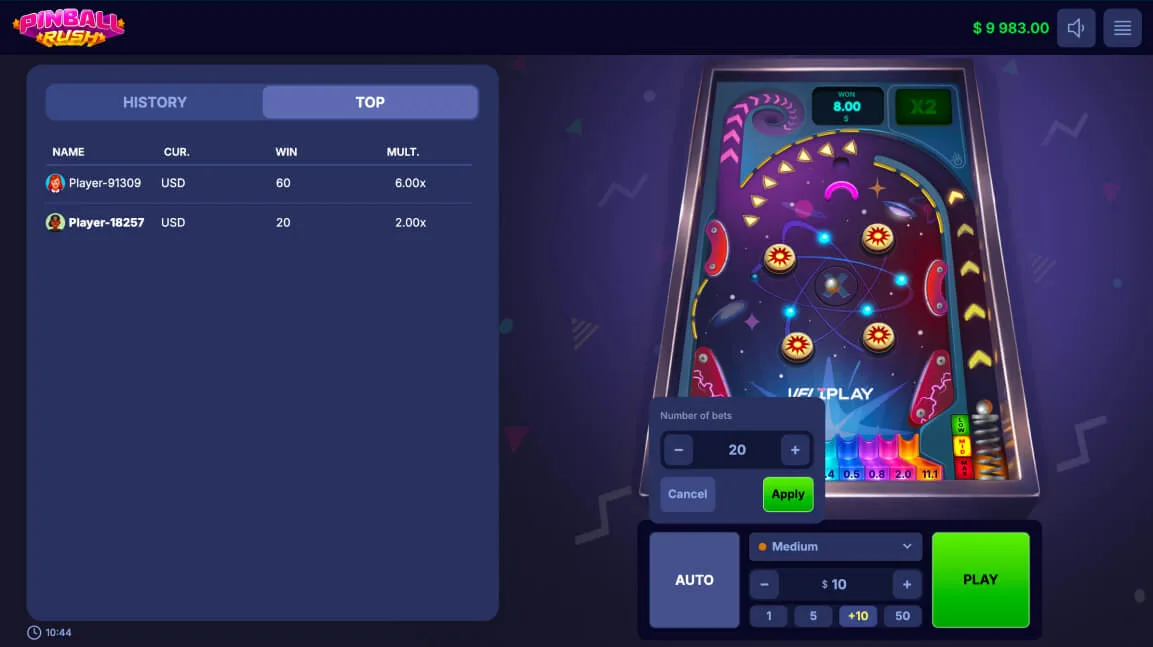
The ball interacting with kickers and slingshots in the mid-playfield zone.